Books

Filter:
  • USA
  • Australia
Animal Factory

Animal Factory

Recent public health crises raise urgent questions about how our animal-derived food is raised and brought to market. In Animal Factory, bestselling investigative journalist David Kirby exposes the powerful business and political interests behind large-scale factory farms, and tracks the far-reaching fallout that contaminates our air, land, water, and food.

In this thoroughly researched book, Kirby follows three families and communities whose lives are utterly changed by immense neighboring animal farms. These farms (known as “Concentrated Animal Feeding Operations,” or CAFOs), confine thousands of pigs, dairy cattle, and poultry in small spaces, often under horrifying conditions, and generate enormous volumes of fecal and biological waste as well as other toxins. Weaving science, politics, law, big business, and everyday life, Kirby accompanies these families in their struggles against animal factories. A North Carolina fisherman takes on pig farms upstream to preserve his river, his family’s life, and his home. A mother in a small Illinois town pushes back against an outsized dairy farm and its devastating impact. And a Washington State grandmother becomes an unlikely activist when her home is invaded by foul odors and her water supply is compromised by runoff from leaking lagoons of cattle waste.

Animal Factory is an important book about our American food system gone terribly wrong—and the people who are fighting to restore sustainable farming practices and save our limited natural resources.

Copy credit: Amazon.com

Animal Oppression and Human Violence

Animal Oppression and Human Violence: Domesecration, Capitalism, and Global Conflict 

Nibert centers his study on nomadic pastoralism and the development of commercial ranching, a practice that has been largely controlled by elite groups and expanded with the rise of capitalism. Beginning with the pastoral societies of the Eurasian steppe and continuing through to the exportation of Western, meat-centered eating habits throughout today’s world, Nibert connects the domesecration of animals to violence, invasion, extermination, displacement, enslavement, repression, pandemic chronic disease, and hunger. In his view, conquest and subjugation were the results of the need to appropriate land and water to maintain large groups of animals, and the gross amassing of military power has its roots in the economic benefits of the exploitation, exchange, and sale of animals. Deadly zoonotic diseases, Nibert shows, have accompanied violent developments throughout history, laying waste to whole cities, societies, and civilizations. His most powerful insight situates the domesecration of animals as a precondition for the oppression of human populations, particularly indigenous peoples, an injustice impossible to rectify while the material interests of the elite are inextricably linked to the exploitation of animals.

Nibert links domesecration to some of the most critical issues facing the world today, including the depletion of fresh water, topsoil, and oil reserves; global warming; and world hunger, and he reviews the U.S. government’s military response to the inevitable crises of an overheated, hungry, resource-depleted world. Most animal-advocacy campaigns reinforce current oppressive practices, Nibert argues. Instead, he suggests reforms that challenge the legitimacy of both domesecration and capitalism.

Copy credit: Amazon.com

Animal Rights Human Rights

Animal Rights/Human Rights: Entanglements of Oppression and Liberation

This accessible and cutting-edge work offers a new look at the history of western ‘civilization,’ one that brings into focus the interrelated suffering of oppressed humans and other animals. Nibert argues persuasively that throughout history the exploitation of other animals has gone hand in hand with the oppression of women, people of color, and other oppressed groups. He maintains that the oppression both of humans and of other species of animals is inextricably tangled within the structure of social arrangements. Nibert asserts that human use and mistreatment of other animals are not natural and do little to further the human condition. Nibert’s analysis emphasizes the economic and elite-driven character of prejudice, discrimination, and institutionalized repression of humans and other animals. His examination of the economic entanglements of the oppression of human and other animals is supplemented with an analysis of ideological forces and the use of state power in this sociological expose of the grotesque uses of the oppressed, past and present. Nibert suggests that the liberation of devalued groups of humans is unlikely in a world that uses other animals as fodder for the continual growth and expansion of transnational corporations and, conversely, that animal liberation cannot take place when humans continue to be exploited and oppressed.

Copy credit: Amazon.com

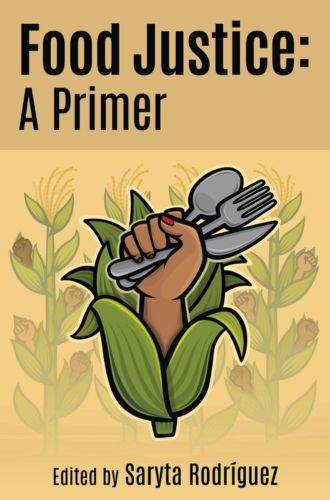
Food Justice A Primer

Food Justice: A Primer

Food Justice: A Primer is a collection of essays by activists, academics, farmers, and others involved in the Food Justice Movement examining food justice and food sovereignty from a variety of angles. These essays range in scope and tone from personal, hands-on experiences to macro-level observations of how communities’ ability to both access healthful, justly-produced food and determine for themselves how they are fed can be improved upon, including efforts currently underway toward these ends.

For too long, the Food Justice Movement has been senselessly divided between those who focus on the rights of humans and those who uphold the rights of nonhumans. In truth, the most just and efficient way forward to promote this cause is for these communities to come together and work in solidarity with one another, as myriad individuals and organizations around the world demonstrate with their hard work and careful analysis. This book aims to illustrate why this is necessary while confirming that it is possible, in hopes of inspiring further cooperation and collaboration between seemingly disparate causes under the umbrella of Food Justice.

Copy credit: Amazon.com

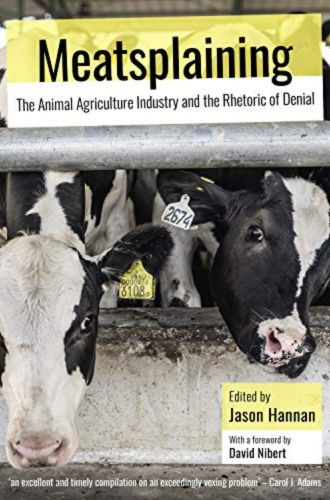
Meatsplaining

Meatsplaining: The Animal Agriculture Industry and the Rhetoric of Denial 

The animal agriculture industry, like other profit-driven industries, aggressively seeks to shield itself from public scrutiny. To that end, it uses a distinct set of rhetorical strategies to deflect criticism. These tactics are fundamental to modern animal agriculture but have long evaded critical analysis. In this collection, academic and activist contributors investigate the many forms of denialism perpetuated by the animal agriculture industry. What strategies does the industry use to avoid questions about its inhumane treatment of animals and its impact on the environment and public health? What narratives, myths and fantasies does it promote to sustain its image in the public imagination?

Copy credit: Amazon.com

Sistah Vegan

Sistah Vegan: Black Female Vegans Speak on Food, Identity, Health, and Society

Sistah Vegan is a series of narratives, critical essays, poems, and reflections from a diverse community of North American black-identified vegans. Collectively, these activists are colonising their bodies and minds via whole-foods veganism. By kicking junk-food habits, the more than thirty contributors all show the way toward longer, stronger, and healthier lives. Suffering from type-2 diabetes, hypertension, high blood pressure, and overweight need not be the way women of colour are doomed to be victimised and live out their mature lives. There are healthy alternatives. Sistah Vegan is not about preaching veganism or vegan fundamentalism. Rather, the book is about how a group of black-identified female vegans perceive nutrition, food, ecological sustainability, health and healing, animal rights, parenting, social justice, spirituality, hair care, race, gender-identification, womanism, and liberation that all go against the (refined and bleached) grain of our dysfunctional society. Thought-provoking for the identification and dismantling of environmental racism, ecological devastation, and other social injustices, Sistah Vegan is an in-your-face handbook for our time. It calls upon all of us to make radical changes for the betterment of ourselves, our planet, and by extension everyone.

Copy credit: Amazon.com

Slaughterhouse

Slaughterhouse

Slaughterhouse is the first book of its kind to explore the impact that unprecedented changes in the meatpacking industry over the last twenty-five years — particularly industry consolidation, increased line speeds, and deregulation — have had on workers, animals, and consumers. It is also the first time ever that workers have spoken publicly about what’s really taking place behind the closed doors of America’s slaughterhouses.In this new paperback edition, author Gail A. Eisnitz brings the story up to date since the book’s original publication. She describes the ongoing efforts by the Humane Farming Association to improve conditions in the meatpacking industry, media exposés that have prompted reforms resulting in multimillion dollar appropriations by Congress to try to enforce federal inspection laws, and a favourable decision by the Supreme Court to block construction of what was slated to be one of the largest hog factory farms in the country. Nonetheless, Eisnitz makes it clear that abuses continue and much work still needs to be done.

Copy credit: Amazon.com

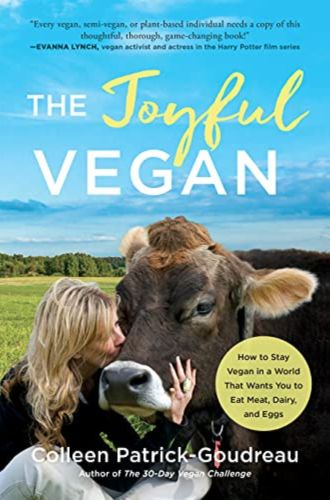
The Joyful Vegan

The Joyful Vegan

Finding plant-based recipes? Easy. Dealing with the social, cultural, and emotional pressures of being vegan? That’s the hard part.

Motivated by a desire to eat more healthfully or live more ethically, many people choose veganism as a logical and sensible response to their concerns about animals, the environment, and their health. Yet, despite their positive intentions, they’re often met with resistance from friends, family members, and society at large. These external factors can make veganism socially difficult―and emotionally exhausting―to sustain. This leads to an unfortunate reality: the majority of vegetarians and vegans revert back to consuming meat, dairy, or eggs―breaching their own values and sabotaging their own goals in the process.

Colleen Patrick-Goudreau, known as the “Joyful Vegan,” has guided countless individuals through the process of becoming vegan. Now, in The Joyful Vegan, she shares her insights into why some people stay vegan and others don’t. Understanding that the food is the easy part of being vegan, Colleen turns her attention to what she believes is the most challenging―dealing with the social, cultural, and emotional aspects: being asked to defend your eating choices, living with the awareness of animal suffering, feeling the pressure (often self-inflicted) to be perfect, and experiencing guilt, remorse, and anger.

Copy credit: Amazon.com

Vegan Entanglements

Vegan Entanglements: Dismantling Racial and Carceral Capitalism

Scholarly and personal essays on the intersections of the prison-industrial complex, industrial animal agriculture, and capitalism.
 
Vegan Entanglements: Dismantling Racial and Carceral Capitalism invites over 15 activists, scholars, and journalists to grapple with some of the most topical issues facing the animal protection movement, specifically its historical dependence on the prison- and immigration- industrial complexes and the carceral logics that inform and normalize the violence of incarceration and deportation. The contributors to this collection not only dissect and interrogate this relationship between the animal welfare movement and carcerality, surveillance, white supremacy, and capitalism, but offer concrete tactics for activists, non-profits, and other stakeholders to create a more equitable animal welfare movement based upon abolition and collective liberation.

Copy credit: Amazon.com

Veganism in an Oppressive world

Veganism in an Oppressive World: A Vegans-of-Color Community Project

What would it take for veganism to spread further than ever before?

Through the voices of vegans of color, Veganism in an Oppressive World will revolutionize the way you see our movement. A must read for new vegans and seasoned nonhuman animal activists alike, this community-led effort provides in-depth, first-hand accounts and analyses of what is needed to broaden the scope of veganism beyond its current status as a fringe or “single-issue” movement while ensuring that justice for nonhumans remains its central focus.

This collection of academic essays, personal reflections and poetry critically examines the state of the mainstream nonhuman animal rights movement while imparting crucial perspectives on how to build a movement that is inclusive, consistent, and effective.

Copy credit: Amazon.com

Nothing found – try another category or adjust any applied filters.

animals

All animals deserve to live a life free from suffering and exploitation.

planet

Fewer emissions, land use, water consumption, and other environmental pressures.

health

A plant-based diet provides all the nutrients that the body needs to thrive.

people

Promoting social justice, food security and equal rights for all human beings.