Books

Filter:
  • Australia
  • USA
  • UK
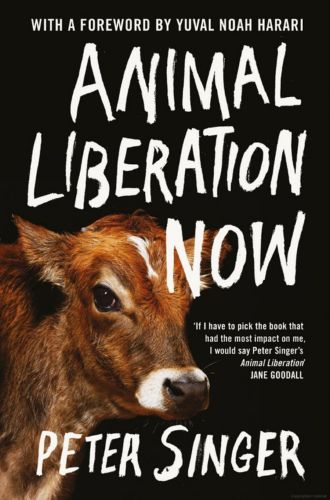
Animal Liberation Now Book

Animal Liberation Now

Few books maintain their relevance – and have remained continuously in print – nearly 50 years after they were first published. Animal Liberation, one of TIME’s “All-TIME 100 Best Non-Fiction Books” is one such book. Since its original publication in 1975, this groundbreaking work has awakened millions of people to the existence of “speciesism”—our systematic disregard of nonhuman animals—inspiring a worldwide movement to transform our attitudes to animals and eliminate the cruelty we inflict on them.
In Animal Liberation Now, Singer exposes the chilling realities of today’s “factory farms” and product-testing procedures, destroying the spurious justifications behind them and showing us just how woefully we have been misled.

Now, for the first time since its original publication, Singer returns to the major arguments and examples and brings us to the current moment. This edition, revised from top to bottom, covers important reforms in the European Union, and now in various U.S. states, but on the flip side, Singer shows us the impact of the huge expansion of factory farming due to the exploding demand for animal products in China. Further, meat consumption is taking a toll on the environment, and factory farms pose a profound risk for spreading new viruses even worse than COVID-19. Animal Liberation Now includes alternatives to what has become a profound environmental and social as well as moral issue. An important and persuasive appeal to conscience, fairness, decency, and justice, it is essential reading for the supporter and the skeptic alike.

Copy credit: Amazon.com

Eating Animals

Eating Animals

Part memoir and part investigative report, Eating Animals is the groundbreaking moral examination of vegetarianism, farming, and the food we eat every day that inspired the documentary of the same name.

Bestselling author Jonathan Safran Foer spent much of his life oscillating between enthusiastic carnivore and occasional vegetarian. For years he was content to live with uncertainty about his own dietary choices but once he started a family, the moral dimensions of food became increasingly important.

Faced with the prospect of being unable to explain why we eat some animals and not others, Foer set out to explore the origins of many eating traditions and the fictions involved with creating them. Traveling to the darkest corners of our dining habits, Foer raises the unspoken question behind every fish we eat, every chicken we fry, and every burger we grill.

Copy credit: Amazon.com

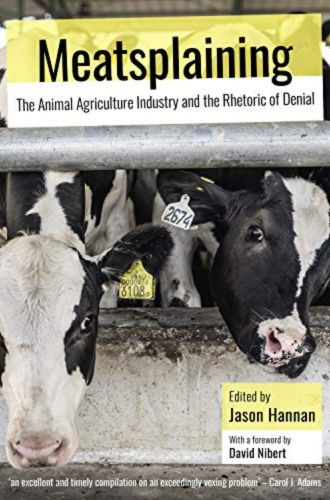
Meatsplaining

Meatsplaining: The Animal Agriculture Industry and the Rhetoric of Denial 

The animal agriculture industry, like other profit-driven industries, aggressively seeks to shield itself from public scrutiny. To that end, it uses a distinct set of rhetorical strategies to deflect criticism. These tactics are fundamental to modern animal agriculture but have long evaded critical analysis. In this collection, academic and activist contributors investigate the many forms of denialism perpetuated by the animal agriculture industry. What strategies does the industry use to avoid questions about its inhumane treatment of animals and its impact on the environment and public health? What narratives, myths and fantasies does it promote to sustain its image in the public imagination?

Copy credit: Amazon.com

Slaughterhouse

Slaughterhouse

Slaughterhouse is the first book of its kind to explore the impact that unprecedented changes in the meatpacking industry over the last twenty-five years — particularly industry consolidation, increased line speeds, and deregulation — have had on workers, animals, and consumers. It is also the first time ever that workers have spoken publicly about what’s really taking place behind the closed doors of America’s slaughterhouses.In this new paperback edition, author Gail A. Eisnitz brings the story up to date since the book’s original publication. She describes the ongoing efforts by the Humane Farming Association to improve conditions in the meatpacking industry, media exposés that have prompted reforms resulting in multimillion dollar appropriations by Congress to try to enforce federal inspection laws, and a favourable decision by the Supreme Court to block construction of what was slated to be one of the largest hog factory farms in the country. Nonetheless, Eisnitz makes it clear that abuses continue and much work still needs to be done.

Copy credit: Amazon.com

This is Vegan Propaganda

This is Vegan Propaganda

This Is Vegan Propaganda is the empowering and groundbreaking book on veganism that everyone, vegan and sceptic alike, needs to read. The first book from vegan activist, educator and influencer, Ed Winters.

Our choices can help alleviate the most pressing issues we face today- the climate crisis, infectious and chronic diseases, human exploitation and, of course, non-human exploitation. Undeniably, these issues can be uncomfortable to learn about but the benefits of doing so cannot be overstated. It is quite literally a matter of life and death.

Through exploring the major ways that our current system of animal farming affects the world around us, as well as the cultural and psychological factors that drive our behaviours, This Is Vegan Propaganda answers the pressing question, is there a better way?

Whether you are a vegan already or curious to learn more, this book will show you the other side of the story that has been hidden for far too long. Based on years of research and conversations with slaughterhouse workers and farmers, to animal rights philosophers, environmentalists and everyday consumers, vegan educator and public speaker Ed Winters will give you the knowledge to understand the true scale and enormity of the issues at stake.

Copy credit: Amazon.com

Why We Love Dogs, Eat Pigs and Wear Cows

Why We Love Dogs, Eat Pigs and Wear Cows

Why We Love Dogs, Eat Pigs, and Wear Cows offers an absorbing look at what social psychologist Melanie Joy calls carnism, the belief system that conditions us to eat certain animals when we would never dream of eating others. Carnism causes extensive animal suffering and global injustice, and it drives us to act against our own interests and the interests of others without fully realizing what we are doing. Becoming aware of what carnism is and how it functions is vital to personal empowerment and social transformation, as it enables us to make our food choices more freely—because without awareness, there is no free choice.

Copy credit: Amazon.com

Nothing found – try another category or adjust any applied filters.

animals

All animals deserve to live a life free from suffering and exploitation.

planet

Fewer emissions, land use, water consumption, and other environmental pressures.

health

A plant-based diet provides all the nutrients that the body needs to thrive.

people

Promoting social justice, food security and equal rights for all human beings.